


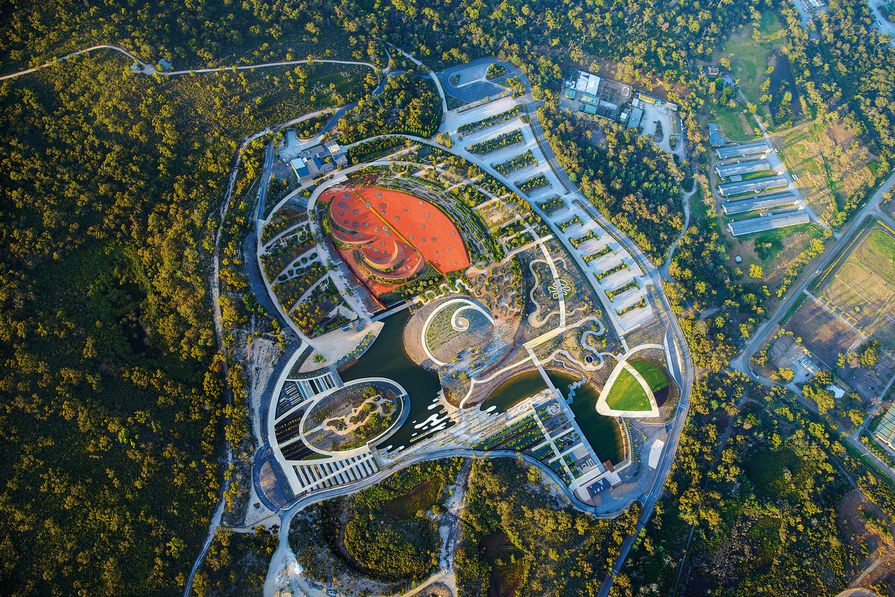
Australijski vrt je australijska najnovija botanička bašta i nalazi se 30km južno od Melburna u Kraljevskoj Botaničkoj Bašti, u Kranbornu. To je vrt koji prikazuje australijsku floru na kreativan, interaktivan i edukativan način.

Australijski vrt koristi australijski pejzaž kao svoju inspiraciju da stvori niz moćnih umetničko-vajarskih pejzažnih iskustava, koji priznaju njegovu raznolikost, širinu, obim i divne prirodne kontraste. Preko kreativnih pejzažnih kompozicija, projekat ima za cilj da podstakne i edukuje posetioce o raznovrsnosti australijske flore.
 U bivšem kamenolomu, završena je botanička bašta, koja omogućava posetiocima da prate metaforičko putovanje vode, kroz australijske pejzaže, od pustinje do obale.
Preko umetnosti pejzažne arhitekture, ovaj integrisani pejzaž, objedinjujući hortikulturu, arhitekturu, ekologiju i umetnost, stvara najveći botanički vrt posvećen australijskoj flori.
 Završetak Australijskog vrta dolazi u vreme, kada se pojam botaničke bašte u svetu ispituje kroz postojeća istraživanja i rekreativne paradigme i preusmerava ponovo na poruke očuvanja predela i obnovljenog interesovanja za smisleni angažman posetilaca.
Pejzaž Australije je i prihvatao i izbegavao njen narod, voleo do uzvišene lepote ili se gnušao, zbog prirodnih teškoća.
 Na istočnoj strani vrta je izložba zelenila, prikaz pejzaža, istraživački zaplet i nizovi drvoreda koji ilustruju našu sklonost da izgradimo predeo na više formalne načine, dok na zapadu su, posetioci u drugom planu u odnosu na vrtove koji su inspirisani prirodnim ciklusima, tu su i trodimenzionalni pejzaži i nepravilne florističke forme.
Ovaj vrt se smatra vodećim u razvoju životne sredine u pogledu biodiverziteta, niske potrošnje vode od koje zavisi hortikultura, projektovanih tokova vode i izborom održivih materijala. Ova pitanja su integrisana u celovitu kompoziciju, pokazujući da je projekat više od zbira njegovih delova, ali umesto toga potpuno holistički i sa jedinstvenim kreativnim ishodom.
 Architects: Taylor Cullity Lethlean, Paul Thompson
Location: Cranbourne VIC 3977, Australia
Category: Park
Area: 40.0 sqm
Project: Year 2012
Photographs: John Gollings, Ben Wrigley, Peter Hyatt
The Australian Garden is Australia’s newest Botanic Garden and is located 30km south of Melbourne at the Royal Botanic Gardens, Cranbourne. It is a garden that displays Australian flora in creative, interactive and educative ways.
 The Australian Garden uses the Australian landscape as its inspiration to create a sequence of powerful sculptural and artistic landscape experiences that recognize its diversity, breadth of scale and wonderful contrasts. Via creative landscape compositions, the project seeks to stimulate and educate visitors of the potential use and diversity of Australian flora.
In a former sand quarry, a new botanic garden has been completed, one that allows visitors to follow a metaphorical journey of water through the Australian landscape, from the desert to the coastal fringe.
 Via the artistry of landscape architecture, this integrated landscape brings together horticulture, architecture, ecology, and art to create the largest botanic garden devoted to Australian flora.
The completion of the Australian Garden comes at a time when Botanic Gardens world-wide are questioning existing research and recreational paradigms and refocusing anew on messages of landscape conservation and a renewed interest in meaningful visitor engagement.
The Australian landscape is embraced or shunned by its people, loved for its sublime beauty or loathed as the cause of hardship.
 On the east side of the garden, exhibition gardens, display landscapes, research plots and forestry arrays that illustrate our propensity to frame our landscapes in more formal manners, whilst on the west, visitors are subsumed by gardens that are inspired by natural cycles, immersive landscapes and irregular floristic forms.
The Garden is considered to be at the forefront of emerging environmental concerns regarding biodiversity, low water dependent horticulture, water sensitive design and sustainable material choices. These issues are integrated into the overall composition, demonstrating that design is more than the sum of its parts but instead a totally holistic and creative outcome.
